

White paper · 2026 · 20 pages
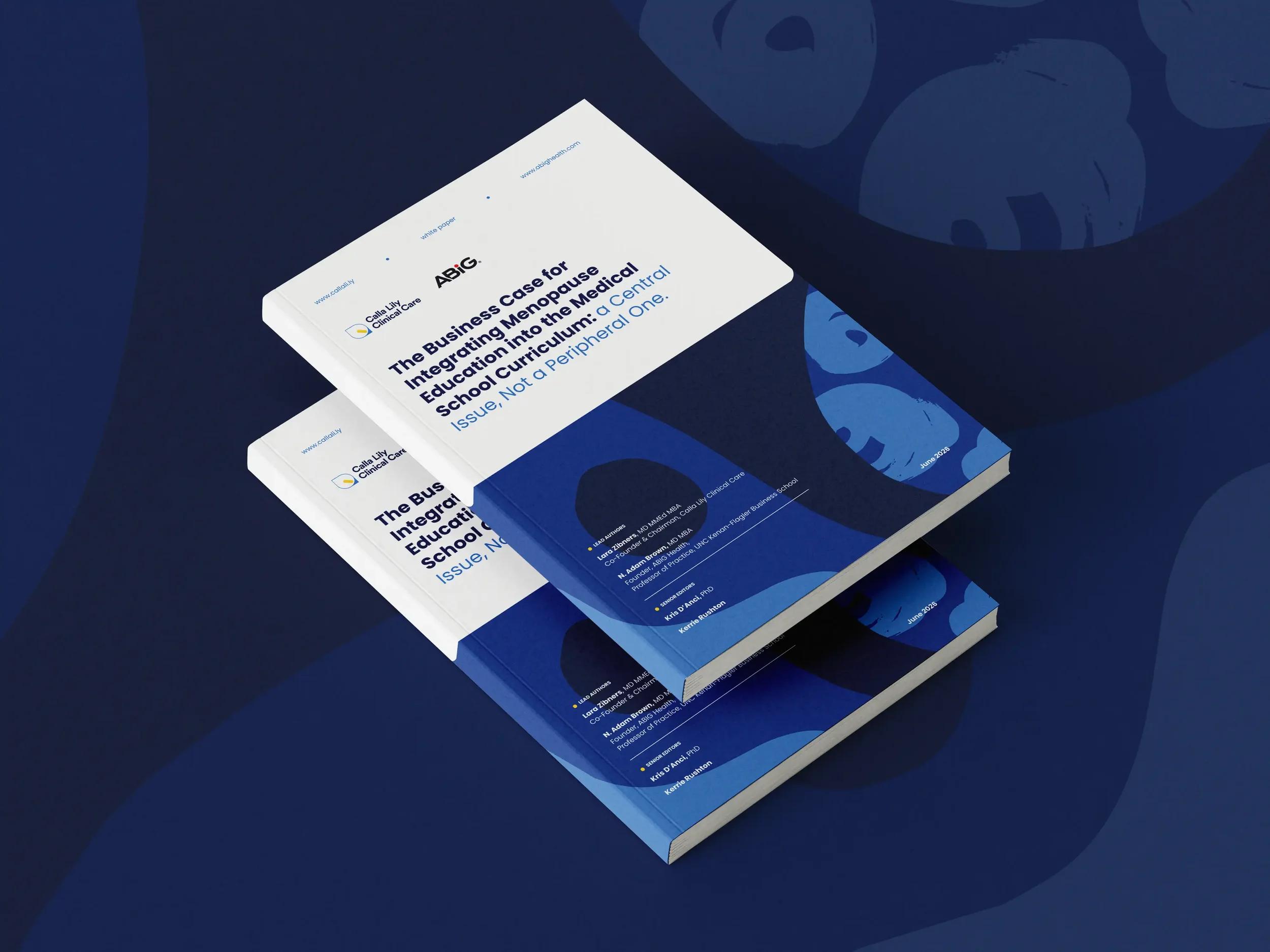
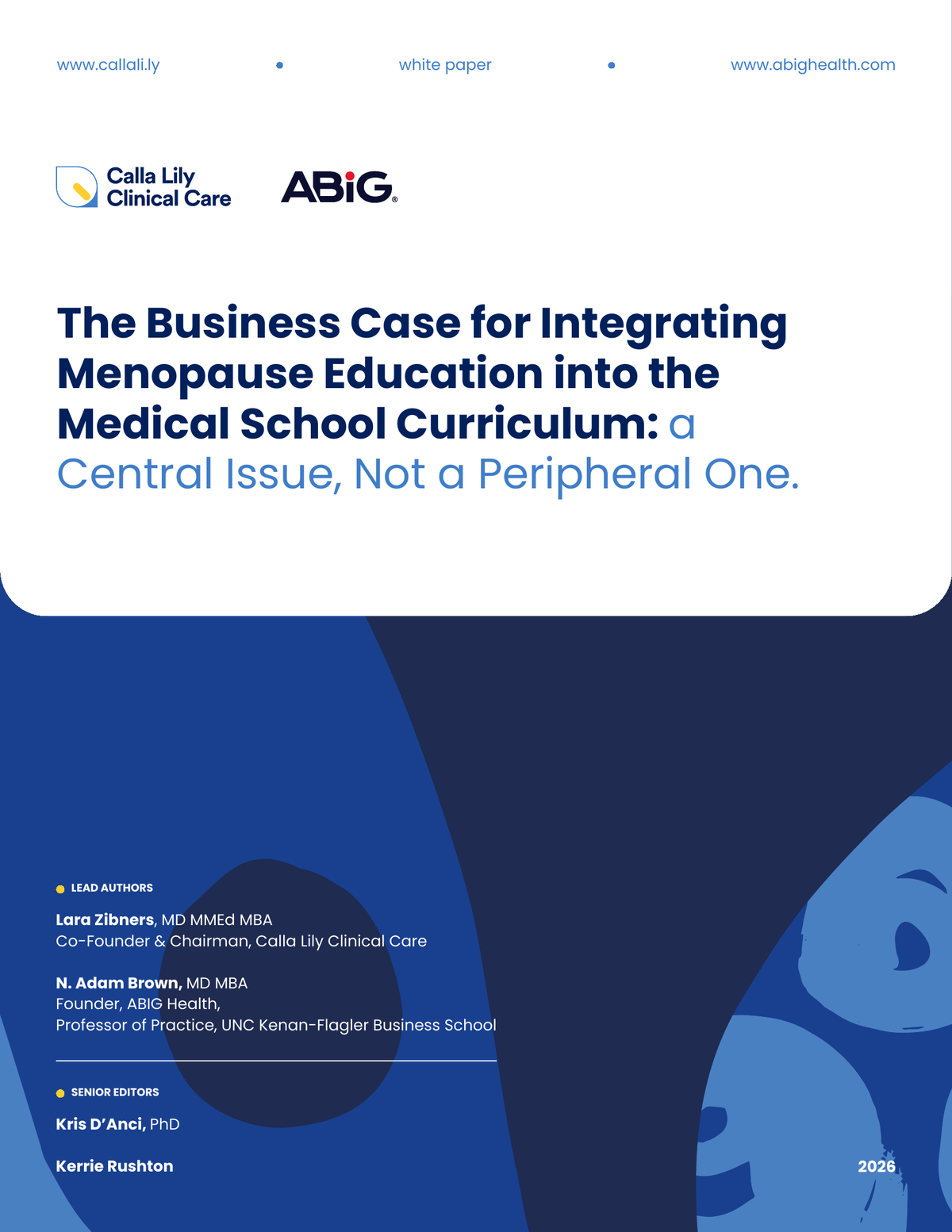
The Business Case for Integrating Menopause Education into the Medical School Curriculum: a Central Issue, Not a Peripheral One.
Menopause affects half the population — yet most physicians receive little or no training on how to recognize and manage it. The cost is measured in poorer care, avoidable spending, and lost economic output.
Free to read. No email necessary.
The movement
Join a growing movement
-
people have read this paper
Loading reader count -
have downloaded it
Loading download count -
shares so far
Loading share count
We can’t reach the live count just now, so this total is incomplete. The real one is higher.
Privacy: We only collect anonymous readership, download, and share counts to understand how this educational resource is helping others. We do not use advertising trackers or identify individual readers. Read our privacy policy
Help close the knowledge gap. #CloseTheKnowledgeGap
Every read brings more awareness. Every download equips another advocate. Every share helps menopause education reach another physician, educator, policymaker, or healthcare leader. Together we're creating momentum for meaningful change.
Goal: 10,000 readers
— readers so far Goal 10,000
- 1,000
- 2,500
- 5,000
- 10,000
Why this matters
The evidence is not ambiguous.
Five findings from the paper. Each one is yours to cite, copy, or share.
-
31.3%
of OB/GYN residency programs report having a menopause curriculum — even though 92.9% of program directors believe it should be taught.
-
6.8%
of family medicine, internal medicine and OB/GYN residents felt adequately prepared to manage menopause.
-
20.3%
of residents received no menopause lectures at all during their residency training.
-
$25B
a year in direct medical expenses from menopausal symptoms among U.S. women aged 45 to 60 — clinical visits, medications and treatments.
-
1.3M
U.S. women enter menopause every year.
“Incorporating menopause-specific education across the entirety of the medical school undergraduate curriculum is a low-cost, high-impact intervention… It is not only a moral imperative; it is an economic one.”
Conclusion, The Business Case for Integrating Menopause Education into the Medical School Curriculum Section 8.0 — A High Value, No Risk Investment
Read it here
The full paper, on this page.
All 20 pages, free to read, nothing to download.
Swipe or use the arrows · double-tap to zoom
The in-page reader could not load in this browser. Open the PDF directly.
Cite this paper
Prefer to listen
Listen to the brief.
A 15-minute narrated briefing that walks through all eight sections of the paper — the gap, the economics, and the case for change. It is a briefing of the findings, not a word-for-word reading; the full 20-page paper is above.
A full text transcript of this briefing is available below the player.
Audio briefing · 15 min
0 people have listened
0:00 15:28
Read the full transcript
The Business Case for Integrating Menopause Education into the Medical School Curriculum: a Central Issue, Not a Peripheral One.
A white paper from Calla Lily Clinical Care, prepared by ABIG Health. Lead authors: Doctor Lara Zibners and Doctor N. Adam Brown. This briefing follows the paper’s eight sections.
1. Why economics matter
Women are demanding better care, and clinicians who understand it. Roughly 1.3 million women in the United States enter menopause every year. By 2060, the number of postmenopausal women in the U.S. is projected to reach approximately 90 million. Between 80% and 96% of them will experience symptoms.
Menopause is not a narrow gynecological event. Declining estrogen affects the cardiovascular system, bone density, the brain, sleep, mood, metabolism, and the urinary tract. It shows up in primary care, cardiology, orthopedics, neurology, urology, and psychiatry. An orthopedic surgeon should understand it. So should an emergency physician.
The moral case for teaching this has been made many times. It has not been enough. So this paper makes the case that has not yet been made clearly enough: the financial one. Because when a health system fails to teach something this common, the cost does not disappear. It simply moves downstream, into avoidable tests, avoidable prescriptions, avoidable hospitalizations, and lost workforce productivity.
2. The current state of affairs
Here is what medical education currently does with menopause.
Only 31.3% of United States residency programs include any menopause curriculum. In a content analysis of Canadian medical schools, just 8.6% of publicly available curriculum documents mentioned women’s health at all. 58% of medical textbooks were found to have inadequate menopause content.
The result is predictable. Only 6.8% of resident physicians across internal medicine, family medicine, and obstetrics and gynecology reported feeling adequately equipped to manage women experiencing menopause. 20.3% reported receiving no menopause education whatsoever.
And the people running these programs know it. 92.9% of program directors strongly agree that residents nationwide should be exposed to a standardized menopause curriculum.
The paper is direct about what this omission communicates. When a topic is left out of medical school, it sends a clear signal to students: it doesn’t matter. That is the wrong message about a condition that 100% of women who live long enough will experience.
Consider the contrast the paper draws. In 2012, a medical school curriculum was published on erectile dysfunction, a condition affecting roughly half of U.S. men. A decade later, menopause education in medical schools remained subpar. The question the paper asks is a fair one: are medical schools willing to be known as institutions that overlook women?
3. Health and financial implications
What does the knowledge gap actually cost, clinically and in dollars?
Start with the direct medical costs. Menopause-related symptoms account for an estimated $25 billion annually in direct medical expenses among U.S. women aged 45 to 60. That covers clinical visits, testing, and treatment.
The downstream costs are far larger. Cardiovascular disease in postmenopausal women is projected to exceed $200 billion per year. Cardiovascular conditions, including coronary heart disease and stroke, account for 35% of deaths in women.
Bone health follows the same pattern. Approximately 75% of hip fractures occur in women. Osteoporotic fractures among menopausal women were attributed an estimated $5.1 billion in hospitalization costs in 2011 alone. And despite the strong link between osteoporosis and these fractures, fewer than 12% of those patients had a pre-fracture diagnosis of osteoporosis, which the paper calls a missed opportunity for preventative measures.
Some of the most effective interventions are also among the cheapest. Vaginal estrogen alone can prevent about 40% of recurrent urinary tract infections. That is a low-cost treatment many physicians were simply never trained to consider.
This is the paper’s central mechanism. These are not exotic, expensive diseases. They are common, predictable consequences of a hormonal transition that every woman goes through, and much of the spending attached to them is avoidable with better-trained clinicians.
4. What this means for medical schools
Section four turns to the institutions themselves, and it is framed as cost of inaction, cost of action, and return on investment.
The cost of inaction is reputational. Demand for perimenopause and menopause care is growing quickly, and patients increasingly know whether their clinicians are equipped. Institutions that ignore the call risk being seen as schools that overlook half the population.
The cost of action is lower than most people assume. Curriculum development does require investment: faculty time, resource allocation, materials, and assessment design. But the paper is emphatic that this is integration, not addition. Menopause content can be interlaced into existing coursework in physiology, endocrinology, cardiology, and musculoskeletal health. There is no need to add to student class loads. Cooperation between institutions, existing frameworks such as the curriculum produced by EMAS, and the growing supply of menopause educational materials mean schools can adopt what they need for little additional expense. Faculty expertise may be a limiting resource at first, but tapping existing didactic resources is a short-term investment with long-term benefit.
The returns are both tangible and intangible: improved student competency scores, better patient outcomes, and a rise in academic rankings, which matters for schools competing for the best students. There are also funding opportunities. The recent award of $5 million to The Menopause Society, to advance digital training tools for physicians, is a prime example.
5. What this means for the healthcare system
Closing the training gap triggers what the paper calls a cascade of financial and systemic relief.
First, prevention and early management. Education enables earlier recognition, which means women receive timely, appropriate care and avoid long-term downstream illness. The evidence here is striking. When researchers compared healthcare costs for postmenopausal women over 45 who were prescribed estrogen therapy against those who were not, despite having vasomotor symptoms, the treated group showed substantial savings: total costs were roughly three times lower, and inpatient costs roughly fifty times lower.
Second, reducing diagnostic waste. An actuarial review of insurance costs found that inadequate menopausal care produces significant waste, as women seek out specialty visits and tests across multiple providers looking for answers. That report identified over $4,600 in wasteful spending per patient per year. Physicians who recognize the signs of menopause order fewer unnecessary tests and fewer inappropriate medications. That lowers direct costs and improves patient safety.
Third, efficiency across specialties. In primary care, better triage and fewer unnecessary referrals. In obstetrics and gynecology, streamlined care protocols. In endocrinology and geriatrics, less fragmented care. In orthopedics, fewer osteoporotic fractures and fewer complications of repair.
The pattern is consistent. Knowledge deployed early is dramatically cheaper than illness managed late.
6. Macroeconomics and the workforce
Now widen the lens to the labor market.
Women going through the transition to a menopausal state are estimated to make up 30% of women in the United States labor force, and they are typically aged 45 to 60. Annual productivity losses from menopause symptoms in the U.S. workforce are estimated at $1.8 billion. Account for the fuller career impact, including reduced hours, missed promotions, and women leaving the workforce earlier than they intended, and that figure exceeds $5.4 billion.
The pattern holds internationally. Approximately $2 billion in the United Kingdom. $3.3 billion in Canada. $9.9 billion in Germany. Some estimates place the menopause-related market potential on global gross domestic product at approximately $120 billion, making menopause one of the top two women’s health conditions, next to endometriosis, with respect to economic impact.
These are women at the peak of their expertise and earning power, in senior and leadership roles, and the losses are largely preventable with adequate clinical care.
The market has already noticed. The menopause market was estimated at $17.79 billion and is projected to reach $24.35 billion by 2030, with the United States holding the largest share. Physicians who genuinely understand menopause are better positioned to steer patients toward clinically sound options, and to help shape the products and services being built.
7. Case studies and who is already leading
Encouragingly, this is not starting from nothing.
A growing number of academic medical institutions have created broad, multidisciplinary centers focused on women’s and menopausal health. The Mayo Clinic, New York University Langone Health, UCLA, and Johns Hopkins are among the systems that have recognized how much appropriate menopause treatment matters. Educational material aimed at providers is increasingly available. The limitation is that these resources still depend on a clinician being interested and, crucially, aware of the gap in their own training.
In 2022, EMAS released a position statement calling for a menopause education curriculum for healthcare providers, offering a model for educating all providers on the effects of perimenopause and menopause. Its measurable impact is hard to assess, since no standardized curriculum is mandated for undergraduate medical training, but it marks real recognition of the need at the earliest entry point.
Employers have moved faster than medical schools. Companies including Midi, Maven, and Carrot Fertility provide workplace menopause packages. More than 500 companies, among them Amazon, Microsoft, and Morgan Stanley, currently offer Maven menopause-related benefits, including personalized treatment plans and mental health support.
The paper also includes a case study written from a medical student’s perspective, describing how visible these gaps are in both the classroom and clinical settings, and worrying about how they will shape care later in practice.
8. Conclusion: a high-value, no-risk investment
Here is what makes this an unusual problem: the fix is cheap.
Incorporating menopause-specific education across the undergraduate medical curriculum is a low-cost, high-impact intervention. It requires no new buildings, no new departments, and no new degrees. Much of the material sits adjacent to what is already being taught.
The infrastructure exists. Organizations such as The Menopause Society offer certification programs and evidence-based resources, and 89.7% of program directors said they would likely use a self-paced curriculum if one were available. The appetite is there.
The clinical landscape has also shifted. For years, hormone replacement therapy was approached with caution shaped by evolving evidence and safety concerns, and those uncertainties influenced real decisions. In one survey, 34.4% of residents said they would not offer hormone therapy to a symptomatic, newly menopausal woman with no contraindications. That hesitancy is unsurprising given the black box warning that accompanied all estrogen-containing menopause therapies until 2025. With that warning now removed, there is a clear opportunity to teach hormone therapy on the evidence, including both its efficacy and its safety.
Doctor Lara Zibners, one of the paper’s lead authors, puts it this way:
Menopause education must go beyond the walls of a gynecologist’s office. A cardiologist needs to understand the impact of declining estrogen on cardiovascular risk. A neurologist should be taught about mood changes, cognitive symptoms, and sleep disorders. Emergency medicine doctors should be prepared for patients presenting with palpitations, joint pain, and worsening anxiety, and meet them with both a diagnosis and potential interventions.
The paper’s conclusion is unambiguous. Changing how we train doctors is now of paramount importance. The benefits are widespread: reduced healthcare expenditures, more efficient patient care, and a stronger, more resilient workforce. It is not only a moral imperative. It is an economic one.
This paper is the combined effort of physicians, future physicians, business leaders, investors, researchers, and educators. It is a call to action for medical education institutions across the nation, and an opportunity for those willing to lead.
That is the end of this briefing. The full 20-page paper, including the case studies, is available to read and download on this page. If it moved you, share it. Every share helps menopause education reach another physician, educator, policymaker, or healthcare leader.
Authors & contributors
Written by clinicians. Backed by practitioners.

N. Adam Brown, MD MBA
Editors
- Kris D’Anci, PhDSenior Editor & Contributor
- Kerrie RushtonSenior Editor
Contributors
- Mariam Ranginwala, BSThe Ohio State University College of Medicine, Class of 2028
- Jocelyn Wittstein, MDAssociate Professor of Orthopedic Surgery, Duke University School of Medicine
- Tamar Gur, MD PhDEndowed Director, Soter Women’s Health Research Program; Associate Professor of Psychiatry & Behavioral Health, Neuroscience, Obstetrics & Gynecology; Associate Director, Medical Scientist Training Program, The Ohio State University College of Medicine
- Jessica Federer, MPHYale IRB; former Bayer CDO; Health of Women Investor Summit
- Laura OkaforCEO, Perry & Perry Academy
- Laura FarmerPresident, Opus Strategy
- Christian HaydenOpus Strategy
Post it on Instagram
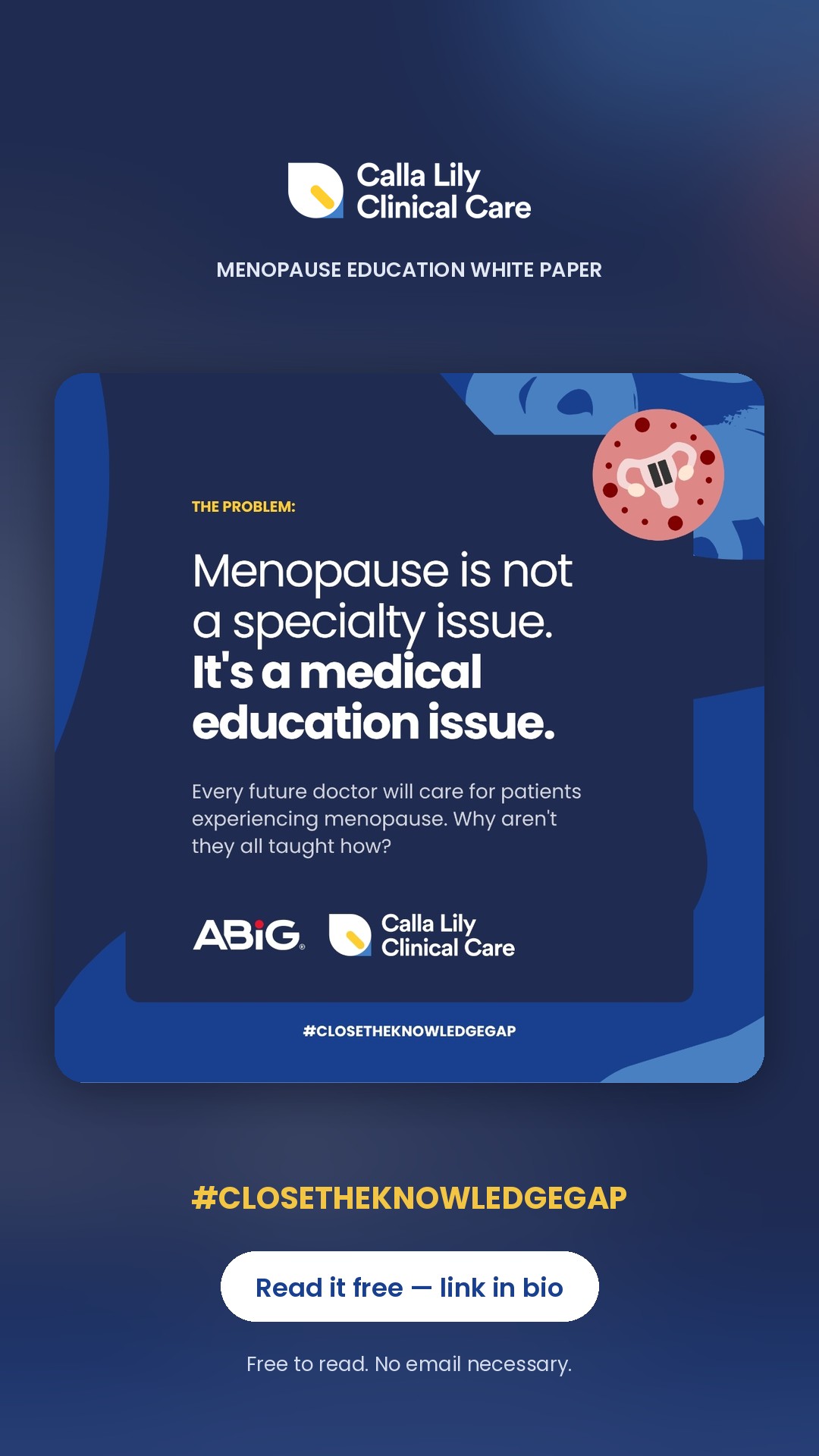
A ready-made Instagram kit.
Choose your topic, save the graphic, copy the caption.
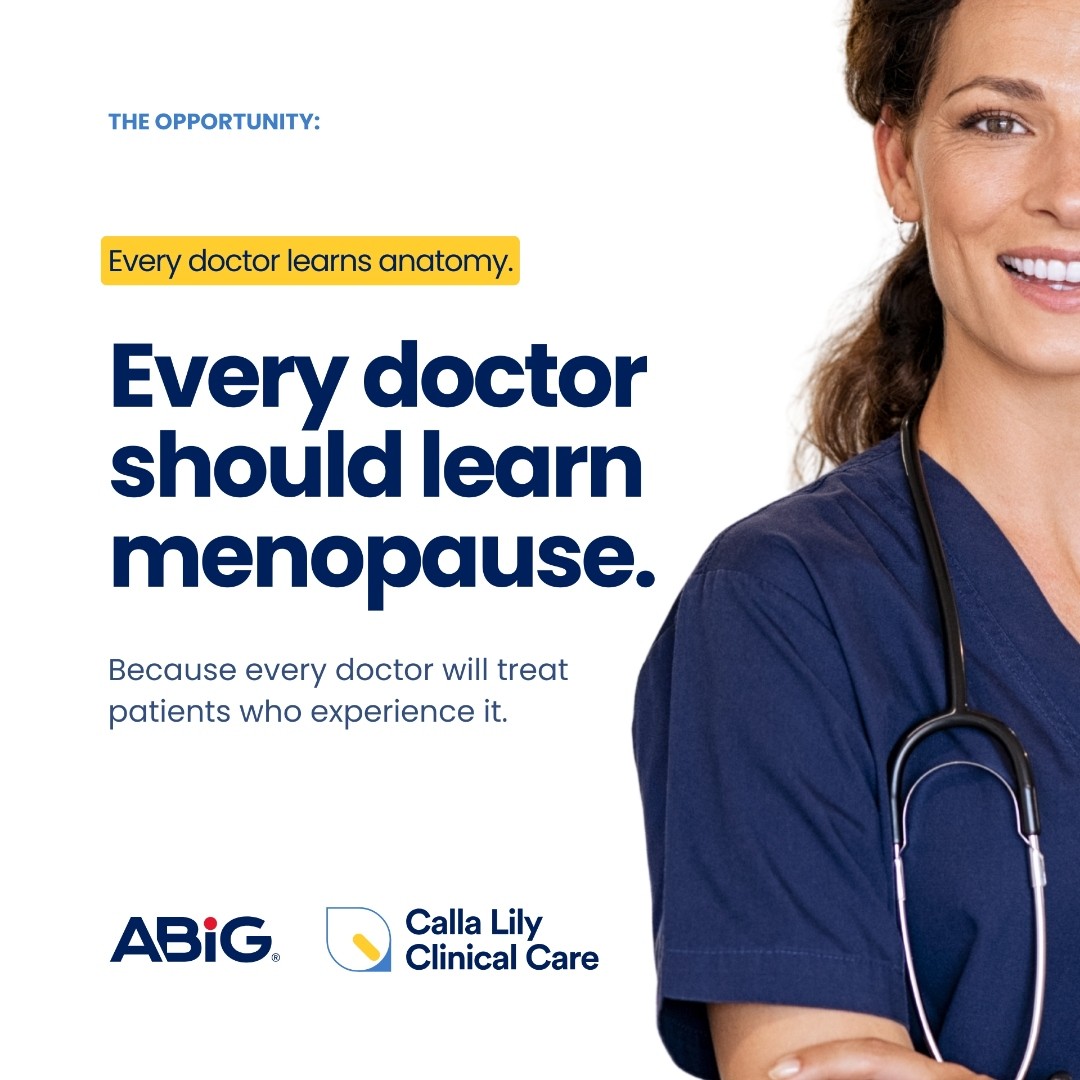
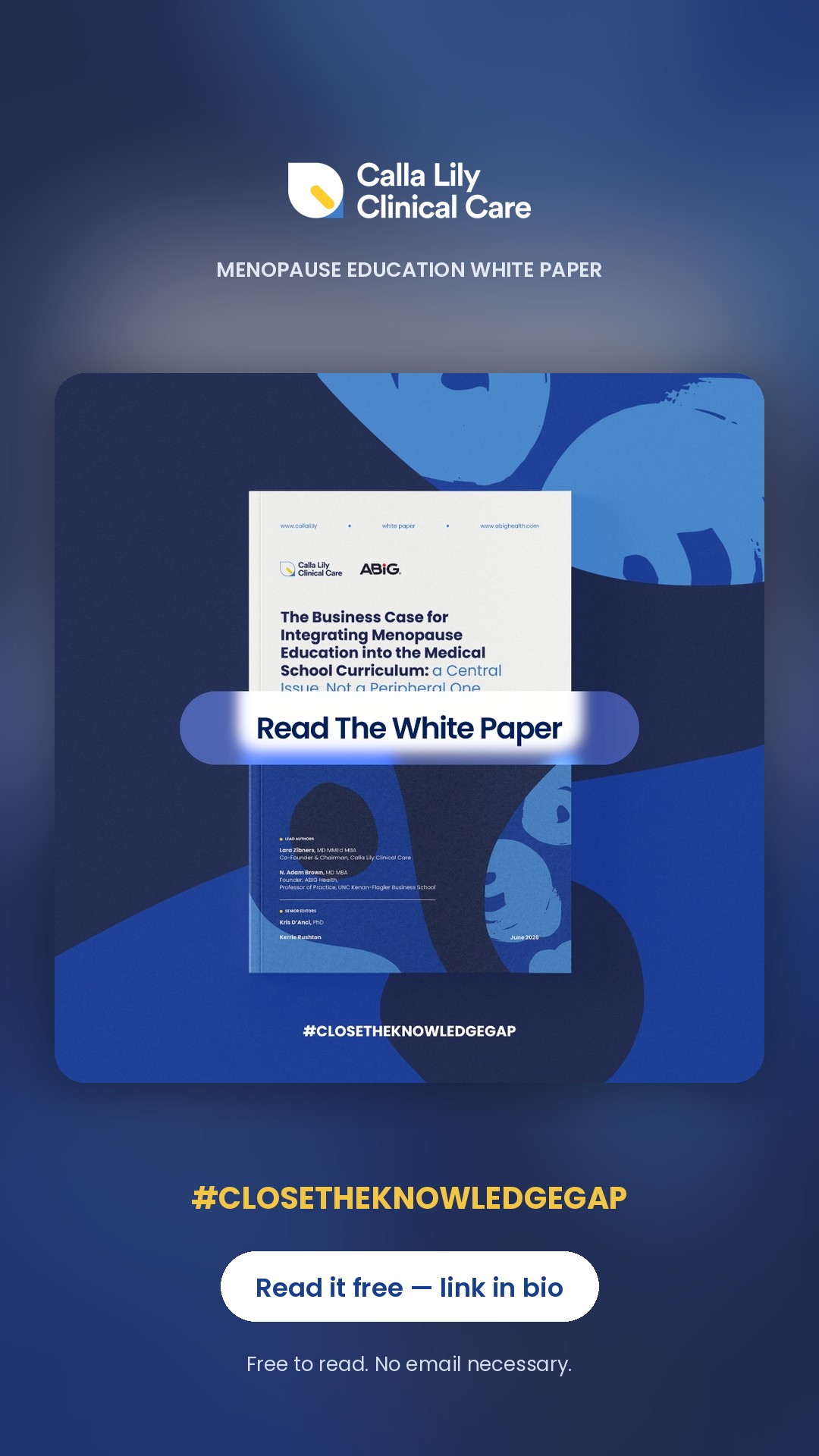
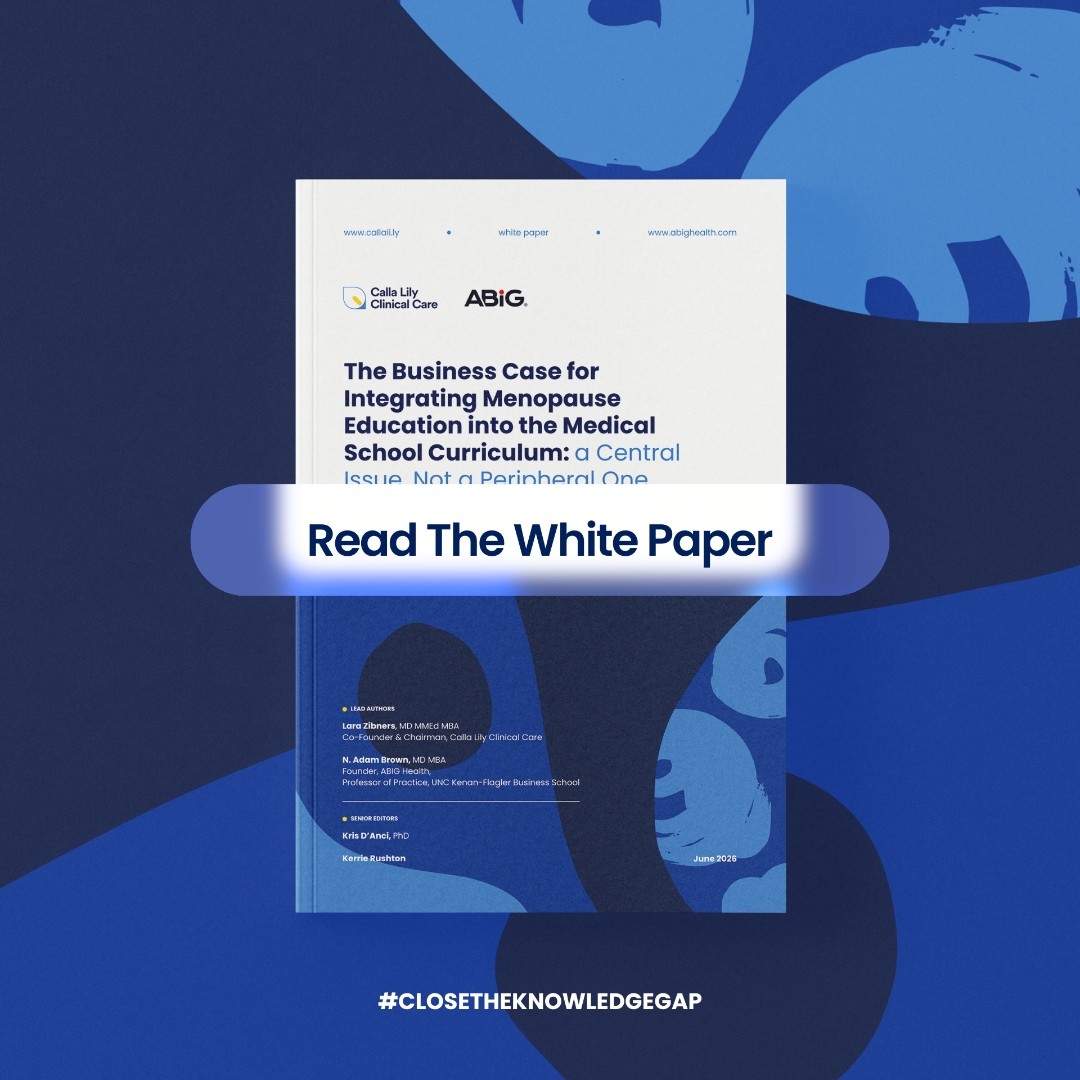
How to post on Instagram.
Feed post
- Save one square (1080×1080) — whichever makes your point.
- + → Post, pick it from your camera roll.
- Paste the caption from above.
- A link in a feed caption is not clickable. Put the URL in your bio.
Story the only tappable link
- Download a Story frame (1080×1920).
- + → Story, upload it from your camera roll.
- Sticker icon → Link → paste the white paper URL.
- Drag it over the “Read it free” button.
- Link stickers are open to every account, with no follower minimum.
Reel
- Use a Story frame as your background or end card.
- A Reel caption cannot hold a clickable link. Instagram renders it as plain text.
- Put the URL in your bio and “link in bio” in the caption.
- Reshare the Reel to your Story and add a link sticker there.
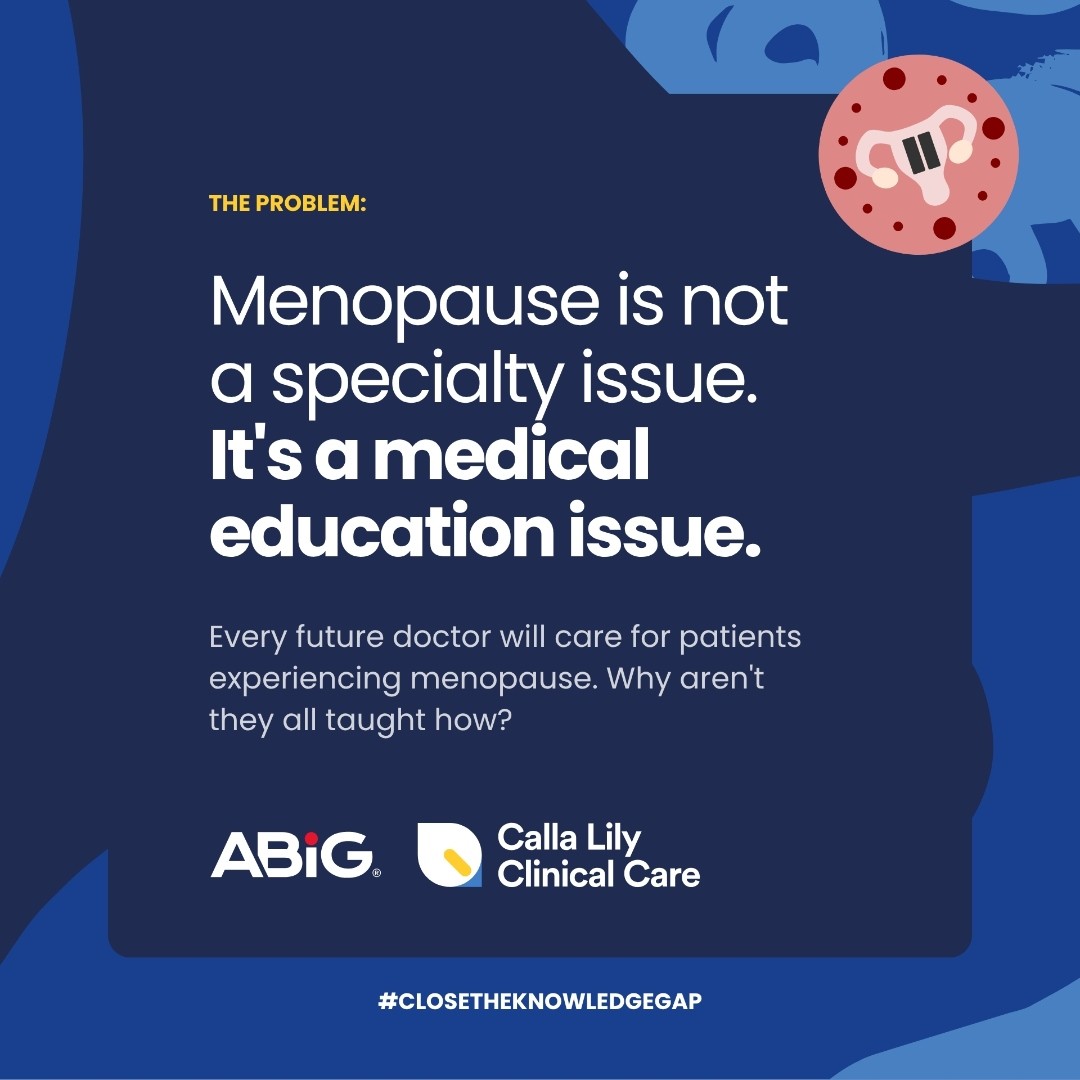
The lack of inclusion of a topic in medical school sends a clear signal to students: it doesn’t matter.
Take action
What to do next.
Three actions, in order of impact. Most people only need one.
For deans, program directors and policymakers
Make it required, not optional.
The ask is this: Will your institution commit to reviewing where menopause education currently sits in your curriculum and what it would take to make it required foundational content?
Need help thinking through the review?
We’re available to talk through the evidence, the curriculum questions to consider, and what other institutions are already doing. No commitment or formal process required.
The paper, one-page brief and presentation materials are free to use and share. Start with the resources below, or reach out if a conversation would be helpful.
We are not asking you to build a new program.
Menopause education fits inside coursework you already teach: endocrinology, primary care, psychiatry and more. You do not have to design the content from scratch. EMAS published a model position statement in 2022 that works as a starter curriculum.
Bring two answers to the call.
- Where menopause education currently sits in your curriculum.
- What it would take to make it required foundational content.
Take these into the room.
Know a dean, chair or curriculum lead?
Forward it to them.
One email to someone who already trusts you is the highest-value thing anyone can do here. You are not making the ask — you are getting it read.
- Copy the template.
- Swap the highlighted parts.
- Send it.
For media
Interview the authors.
Both lead authors are available, with contributors on request.
- Lara Zibners, MD MMEd MBA — what’s missing on the ground: what residents actually aren’t taught, and what closing that gap looks like in practice.
- N. Adam Brown, MD MBA — the business case: the $25B a year in direct medical expenses tied to menopausal symptoms, and what the training gap means for workforce readiness.
- On request: Tamar Gur, MD PhD (Ohio State) on neuroscience and psychiatry, Jocelyn Wittstein, MD (Duke) on musculoskeletal outcomes, and Mariam Ranginwala (Ohio State COM ’28) as the medical-student voice.
Press materials, free to use and quote
- The full white paper PDF · 20 pages
- One-page summary PDF
- Slide deck PPTX · 12 slides
- Audio briefing MP3 · 15 min
- Key statistics, each traceable to the paper On this page
Logos and approved images on request.